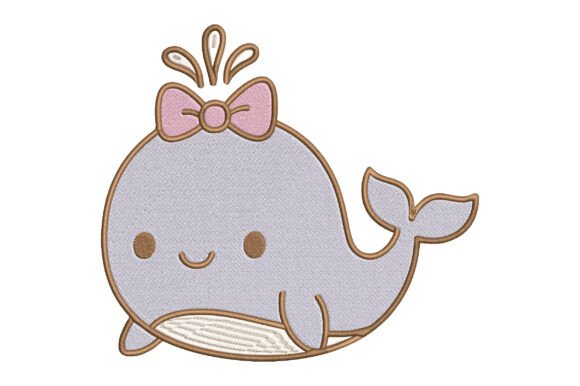
Cute Blue Whale Embroidery Design Review
As a professional embroidery designer specializing in commercial merchandise and brand identity, I approach every new machine embroidery design with a critical eye toward production viability. When evaluating the Cute Blue Whale Embroidery Design for small business applications, my primary focus shifts beyond simple aesthetics to technical performance on branded goods. While this design is categorized under Nursery, its clean lines and friendly silhouette offer significant potential for adult-oriented small business merch, boutique branding, and creative studio assets. This review analyzes how this specific digital embroidery file translates from screen to fabric in a commercial environment.
Visual Personality and Professional Appeal
The first impression of the Cute Blue Whale Embroidery Design strikes a balance between playful and polished. For a business owner, this distinction is vital. A design that is too cartoonish can undermine perceived value, while one that is too rigid may lack the warmth required for handmade brands or local cafés. This whale motif possesses a modern simplicity that reads as intentional rather than juvenile. The visual weight appears balanced, suggesting it will hold up well as a chest logo accent or a standalone embroidered patch.
For businesses like florists, pet groomers, ocean-themed bakeries, or eco-friendly boutiques, this imagery communicates friendliness and approachability without sacrificing professionalism. It avoids excessive detail that often gets lost in commercial embroidery, making it an excellent candidate for high-volume production where clarity is paramount. The design’s inherent charm supports a narrative of care and creativity, essential elements for building customer trust in artisan markets.
Performance Across Branded Merchandise
In real-world testing scenarios, the versatility of the Cute Blue Whale Embroidery Design becomes apparent across various custom apparel and accessories. Its application extends far beyond children's wear when contextualized correctly for business use.
- Staff Uniforms and Aprons: As apron embroidery for a café or bakery, the whale serves as a subtle left-chest logo. Its compact nature ensures it does not interfere with pocket placement or staff movement. On denim or canvas aprons, the design provides a soft contrast to rugged workwear fabrics.
- Tote Bags and Packaging: For Etsy sellers and market vendors, a tote bag design acts as mobile advertising. This whale graphic scales effectively on natural cotton canvas, creating a cohesive look between product packaging and carry bags. It reinforces brand identity at craft fairs and pop-up events.
- Caps and Headwear: Cap embroidery presents unique challenges due to curvature and limited space. The streamlined shape of this whale design minimizes distortion risks common with complex circular motifs. It fits comfortably within standard cap frames without requiring excessive pull compensation adjustments.
- Patches and Labels: Creating an embroidered patch version allows for inventory flexibility. Business owners can stock generic patches and apply them to various items as needed, reducing the need to embroider directly onto finished goods. This is particularly useful for seasonal collections or limited-edition releases.
Technical Considerations for Production
Despite its user-friendly appearance, the Cute Blue Whale Embroidery Design requires careful handling during digitization verification and production setup. Small business owners must understand where this design performs best and where limitations exist.
Fabric Texture and Stabilizer Selection
The success of any finished product depends heavily on matching the design to the material. On textured fabrics like terry cloth or heavy knit polos, fine details in the whale’s outline may sink into the pile. Using an appropriate stabilizer is non-negotiable. For stretchy performance wear or lightweight summer tees, a cut-away stabilizer prevents puckering around the satin stitches. Conversely, on stable canvas tote bags, a tear-away backing may suffice. Always test the fabric texture interaction before running full production batches.
Stitch Density and Wash Durability
Merchandise intended for daily wear, such as staff uniforms or customer gifts, faces frequent laundering. High stitch density areas can cause fabric distortion or thread breakage over time. Review the fill patterns in the Cute Blue Whale Embroidery Design to ensure they are optimized for durability rather than just coverage. If the design includes large solid fills, consider lightening the density slightly to maintain garment drape and reduce needle heat. For items washed weekly, verify that the thread colors selected are colorfast and resistant to industrial detergents.
Sizing Limitations
While versatile, this design has minimum size thresholds. Reducing it below 1.5 inches may result in loss of definition, especially if facial features or tail details are present. For tiny collar tags or sleeve cuffs, a simplified icon version might be necessary. Always confirm the recommended hoop size and minimum dimensions specified by the digitizer. Attempting to force a design smaller than its structural integrity allows leads to poor registration and unprofessional results.
Impact on Brand Identity and Customer Perception
Embroidery is a tactile medium that signals quality. When a customer receives a handmade product featuring the Cute Blue Whale Embroidery Design, the raised texture conveys effort and permanence that printed graphics cannot match. This tangible quality elevates perceived value and justifies premium pricing.
Consistency builds recognition. Using this specific whale motif across multiple touchpoints—from website headers to physical tags—creates a unified visual language. However, consistency requires technical precision. Variations in tension, hooping, or thread sheen between batches can fragment brand identity. Treat this embroidery file as a core asset; document your production settings so that reorders match the original samples perfectly. This attention to detail fosters buyer engagement and repeat business.
Designer Notes for Commercial Implementation
Before integrating the Cute Blue Whale Embroidery Design into your product line, follow these professional protocols to mitigate risk and ensure quality:
- Verify Licensing: Confirm the digital embroidery file includes commercial usage rights. Personal licenses do not cover selling embroidered goods or using designs for business branding.
- Create Printable Mockups: Use a printable mockup to visualize placement and scale before stitching. Share these with clients or team members for approval to avoid costly rework.
- Test in Monochrome: Run a sample in black and white first. This reveals registration issues and density problems that colored threads might hide.
- Check Contrast: Evaluate thread colors against both light and dark backgrounds. A blue whale on navy fabric disappears; ensure sufficient contrast for visibility.
- Audit Design Assets: Compare this whale design beside your existing logos and fonts. Ensure the style weight matches your current design assets for visual harmony.
- Document Settings: Record the exact stabilizer type, needle size, hoop tension, and thread brand used. This data is crucial for scaling production or troubleshooting future runs.
The Cute Blue Whale Embroidery Design offers small businesses a charming yet functional option for branded merchandise. By respecting technical constraints and leveraging its friendly aesthetic strategically, entrepreneurs can transform this nursery-inspired motif into a powerful tool for professional differentiation and customer connection.